
Common Online Dating Scams
Common Online Dating Scams & How to Stay Safe
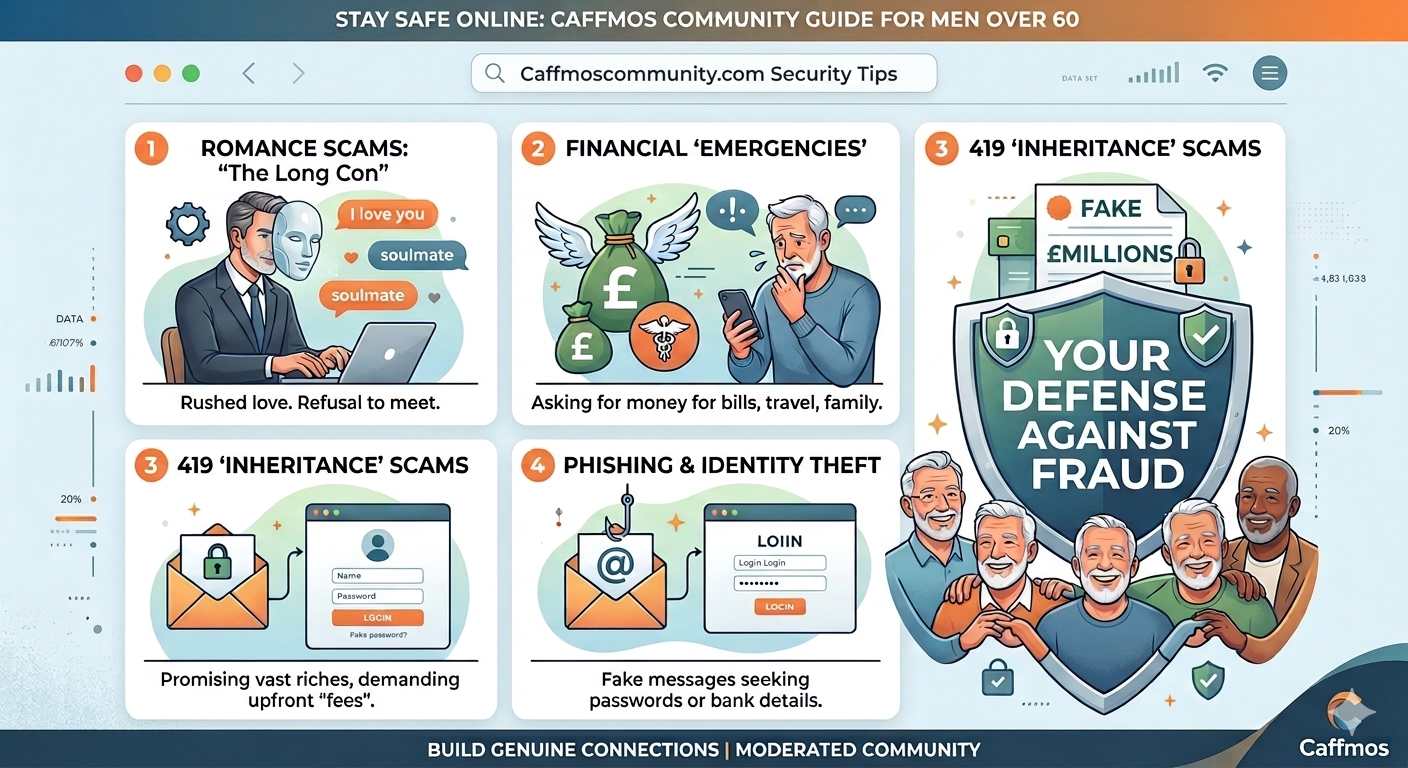
At Caffmos Community, the safety of our members—especially men over sixty—is our top priority. While the internet is a fantastic place to find friendship and romance, it is important to stay vigilant. Scammers often target mature gay men by building emotional trust before attempting to steal money or personal information.
The Caffmos Community 60-Second Safety Checklist
Before you chat, check these 5 red flags:
The "Fast Lane" Move: Do they want to move to WhatsApp, Telegram, or private email immediately? Be cautious.
The "Too Good to Be True" Photo: Does their profile picture look like a professional model or a celebrity? Use Google Image Search to verify.
The "Love Bomb": Are they professing deep love or soulmate status within just a few days? Real connections take time.
The "Broken Camera": Do they always have a technical excuse for why they can't video chat or meet in person? This is a major red flag.
The "Emergency" Ask: Have they asked for money for a hospital bill, a visa, or a "locked" bank account? Never send money to someone you haven't met.
Below in more details, are the most common online scams and "red flags" to look out for.
1. Romance & Dating Scams (The "Long Con")
This is the most frequent scam in the LGBTQ+ community. A scammer creates a fake, attractive profile and "befriends" you. Over weeks or months, they build an intense emotional bond, often claiming they have fallen in love.
The Red Flags:
Sudden Emergencies: They suddenly need money for a sick relative, a legal fee, or a plane ticket to come and visit you.
Refusal to Video Chat: They always have an excuse for why their camera isn't working or why they can't meet in person.
Moving Off-Site: They try to move the conversation to WhatsApp or private email immediately to avoid our site's security moderators.
Caffmos Safety Rule: Never send money to someone you have not met in person, regardless of how long you have been chatting.
2. The Nigerian 419 "Inheritance" Letter
One of the oldest tricks on the web, this scam involves an email or message from someone claiming to be a lawyer, government official, or refugee. They claim they need your help moving a large sum of money out of a country and promise you a large "cut" (often 20–30%) for your assistance.The Catch: You are asked to pay "transfer fees" or "taxes" upfront. Once you pay, the scammer disappears.
The Risk: In some cases, they ask for your bank details to "deposit" the funds, only to empty your account instead.
3. Phishing & Identity Theft
Phishing scams involve fake emails that look exactly like they are from your bank, PayPal, or even Caffmos. They usually claim there is a "security issue" and ask you to log in via a provided link.
How it works: The link leads to a fake website designed to capture your username and password.
Prevention: Always check the URL in your browser. If you receive a suspicious email, do not click the links. Instead, go directly to the website by typing the address into your browser manually.
4. Fake "Competition" Wins
You may receive a notification stating you have won a luxury cruise, a new car, or a large cash prize. To "claim" your prize, you are told to pay a small processing or shipping fee.
The Reality: If you didn't enter a competition, you haven't won one. These are simply traps to get your credit card details.
Join a Community That Cares
Don't let the scammers win. Caffmos Community is a moderated, long-standing space for men over sixty to find genuine friendship and companionship. Join Caffmos Today – It’s Free & Secure!
More Resources
- Scams &Spams
- How to protect yourself from scammers
- Dating / Romance Scams
- Email Scams
- Identifying Email Spoofing