
The Stonewall Riots – The Birth of the Modern LGBTQ+ Rights Movement
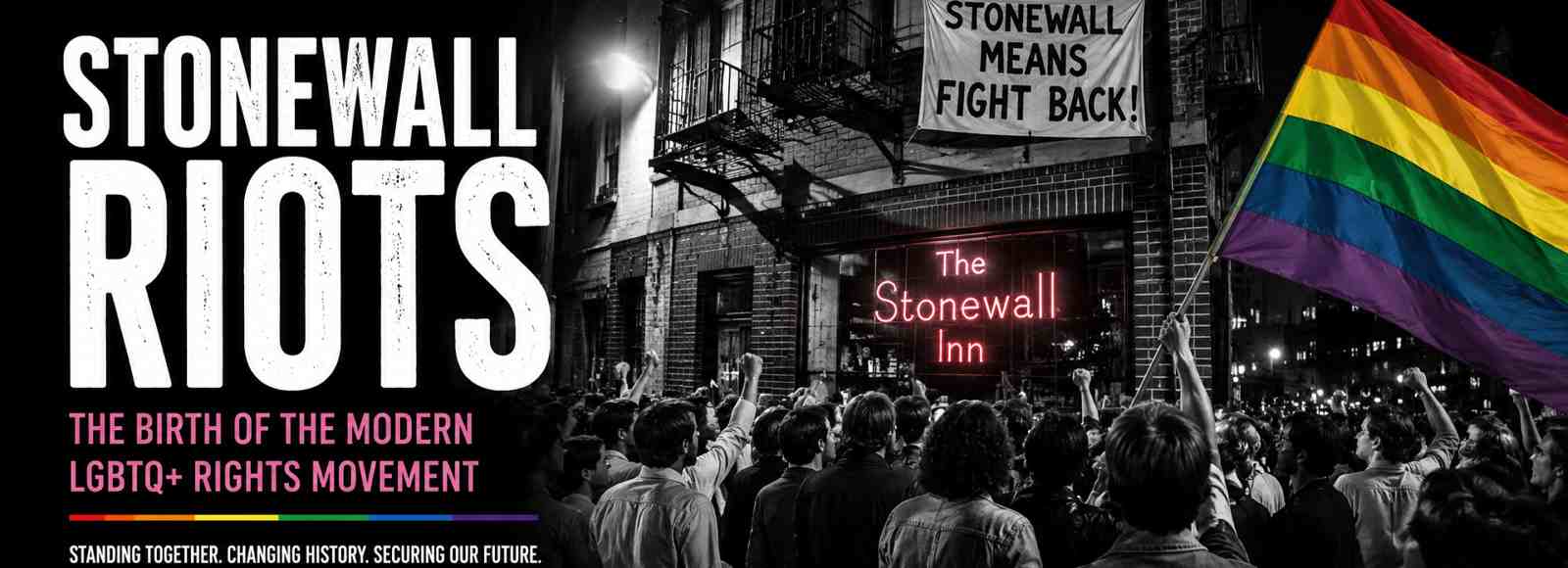
The Stonewall Riots, also known as the Stonewall Uprising, were a defining moment in LGBTQ+ history. Taking place in the early hours of 28 June 1969 outside the Stonewall Inn in New York City's Greenwich Village, the protests marked a turning point in the fight for equality, visibility and human rights for lesbian, gay, bisexual and transgender people.
Although LGBTQ+ people had been campaigning for equal rights before Stonewall, the events of June 1969 inspired a new wave of activism that spread across the United States and eventually around the world. Today, Pride celebrations held every June trace their origins back to these historic events.
Life Before Stonewall
During the 1950s and 1960s, life was extremely difficult for many gay people. In much of the United States, same-sex relationships were illegal, discrimination was widespread, and simply being openly gay could result in losing your job, home or family.
Police regularly targeted gay bars and clubs, carrying out raids, making arrests and intimidating patrons. Many LGBTQ+ venues operated under constant threat of closure, leaving few safe places where people could meet openly.
The Stonewall Inn became one of those rare spaces where members of the LGBTQ+ community could gather, socialise and express themselves despite the risks.
The Police Raid
Shortly after 1:00 am on 28 June 1969, New York police officers raided the Stonewall Inn. Raids were not unusual, but this time the community refused to quietly accept the harassment.
As patrons were escorted outside and arrests began, a crowd gathered in Christopher Street. Frustration that had built up over years of discrimination boiled over into open resistance.
People began challenging the police, shouting in protest and throwing coins, bottles and other objects. Officers retreated into the Stonewall Inn while hundreds of demonstrators surrounded the building.
The confrontation continued into the early morning hours before riot police restored order. Demonstrations continued for several more nights, drawing increasing numbers of supporters. :contentReference[oaicite:1]{index=1}
Who Was Involved?
The Stonewall community was incredibly diverse. It included gay men, lesbians, bisexual people, transgender people, drag performers, homeless LGBTQ+ youth and many others who faced discrimination every day.
Numerous individuals became associated with the uprising and the wider movement, including activists such as Marsha P. Johnson, Sylvia Rivera and Stormé DeLarverie. Historians continue to discuss the precise roles individuals played during the first night, but there is broad agreement that the resistance was a collective act involving many members of the LGBTQ+ community. :contentReference[oaicite:2]{index=2}
Why Stonewall Changed History
The Stonewall Riots were not the first protests for LGBTQ+ rights, but they became the catalyst for a far larger movement.
In the months following the uprising, new organisations were formed to campaign openly for equality, civil rights and legal reform. Activists demanded an end to discrimination and encouraged LGBTQ+ people to live openly and proudly.
The events inspired similar movements throughout North America, Europe and beyond, helping to shape the modern LGBTQ+ rights movement.
The First Pride March
On the first anniversary of the uprising, 28 June 1970, thousands of people marched through New York City during the Christopher Street Liberation Day March.
Similar marches soon took place in cities including Los Angeles, Chicago and San Francisco, eventually evolving into the Pride events celebrated around the world today.
The Legacy of Stonewall
More than five decades later, Stonewall remains a powerful symbol of courage, resilience and equality.
Since 1969, many countries have introduced significant legal protections for LGBTQ+ people, including equal marriage rights, anti-discrimination legislation and improved workplace protections. While much progress has been made, many LGBTQ+ people around the world continue to experience discrimination and persecution.
The message of Stonewall remains as relevant today as it was in 1969: equality, dignity and human rights should belong to everyone.
The Stonewall Inn Today
The Stonewall Inn continues to operate as a historic LGBTQ+ venue in Greenwich Village and is recognised internationally for its role in LGBTQ+ history.
In 2016, the surrounding area became the Stonewall National Monument, the first U.S. National Monument dedicated to LGBTQ+ history, ensuring that future generations understand the importance of the events that took place there. :contentReference[oaicite:3]{index=3}
Why Stonewall Still Matters
Every Pride celebration, every campaign for equality and every step towards greater acceptance owes something to those who stood together outside the Stonewall Inn in June 1969.
The Stonewall Riots remind us that positive social change often begins when ordinary people decide they have had enough of injustice. Their courage helped transform LGBTQ+ rights across the world and continues to inspire new generations to stand up for equality, inclusion and respect.